Sunday, 12 October 2014

Buzzfeed

20 Things That Are Better When They’re Together
This article shows quite odd things that go together and that have made it viral on the internet. Such as videos with animals dressed up in crazy costumes but somehow go together and are quite popular. An example would be the dog breed pugs dressed in bows and hats, scissors with a tape dispenser attached with go well together, animals such as pandas playing on slides. These are all things that interest people as they are very unusual, this catches individual’s attention which then they spread the word about and eventually becomes viral. These videos are mainly on YouTube as it is a large institution.

This news is different from traditional media as the topic is unusual and this type of news is most likely to be spread on social networking sites as it is entertainment news (soft news). Whereas traditional news is more likely to be hard news and about various factors important to the country and about issues around the world. This news is also normally shown on TV and in newspapers unlike this buzzfeed article. 

Friday, 10 October 2014

article

http://www.theguardian.com/media/2014/oct/10/cassetteboy-david-cameron-mashup-copyright  


Cassetteboy: 'David Cameron won't be pleased by our video' 


This article is about the videos Cassetteboy have made, they may be controversial but they believe they are sticking by the law and are allowed to make parodies with a certain amount of copyright material. They hope to make money from their edited videos as their latest video about the Prime Minister has had 3.5 million views on YouTube. 

  • The duo started off making audio parodies, and moved into video with mashups spoofing shows from The Apprentice to Dragons’ Den. 
  • Until last week, the videos he made with his partner-in-crime Steve – who works in an art gallery – would have contravened UK copyright law. But the amendment to the Copyright, Design and Patents Act 1988 has brought them in from the cold. 
  •  Under the new law it would be legal to broadcast Cassetteboy’s work.  
In my opinion cassetteboy could make a lot of money if they had their own TV show, however they have become popular from YouTube and have shared their videos on social networking sites such as Twitter and Facebook. The law has been eased down to certain parodies being made such as the ones cassetteboy creates as they are quite popular and there is no harm in having a bit of fun.

Wednesday, 8 October 2014

article

http://www.theguardian.com/media/2014/oct/08/last-fm-made-loss 

Last.fm made loss of £2.1m last year 


Last.fm

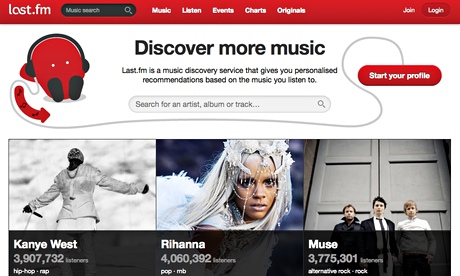
This article tells us that Last.fm lost £2.1m last year as revenues slumped more than 20%. Last.fm competes with other internet music providers and has made annual losses since aquired by the US broadcaster in 2007 for $280m. 

  • Revenues fell 22.8% from £6.38m to £4.92m. 
  • UK revenues almost halved (from £1.28m to £693,000); US revenues fell by 22% (£3.6m to £2.8m); rest of world slumped by 60% (£725,655 to £288,859). 
  • The only bright note was countries within the EU, which grew from £740,659 to £1.12m.
  • Cost of sales almost halved from £5m to £2.78m year on year. 
  • Staff numbers fell from 61 to 35 with the total cost of wages and salaries dropping from £3.7m to £2.75m.
Internet music/video providers such as YouTube have made the most profit for a running while, Therefore it would be difficult for a site like Last.fm to compete, so it is understandable why revenues fell for them. However I would blame the media giants for this as the majority of the most popular sites are owned by a minority so they make the most profit so is difficult for other similar sites to compete. 

article

http://www.theguardian.com/media/2014/oct/06/bbc-iplayer-30-days-sherlock 

BBC iPlayer shows will now be available for 30 daysBBC iPlayer catch-up window extended to 30 days 


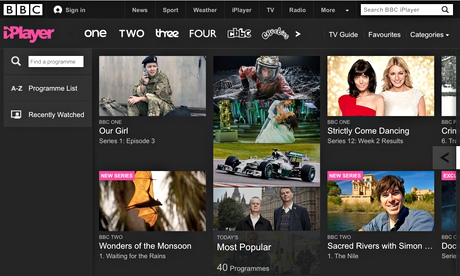
This article is about BBC making their programmes and radio shows available for a longer period of time of 30 days rather than 7 days. This is because shows like 'Sherlock' was the most viewed programme online in 2014 to date. This scheme has been put through in time for the popular autumn dramas such as 'Peaky Blinders'. 

  • There are more than 7m requests for BBC iPlayer programming a day.
  • The BBC said the Sherlock series three opener had received more than 3.6 million requests on the iPlayer.
  • The move came as the BBC revealed that Sherlock’s return from the grave is the most popular show on the iPlayer so far this year. 
I would say this is a good idea for the BBC as the programmes aired on BBC channels are quite popular, so when the audience cannot watch the show as it comes on TV they do not have to miss out on anything, they also do not have to rush to watch the programme before it goes as they have a month to watch it.

article


UK viewers ‘spend five hours a week viewing TV, clips and films online’ 
Online TV and film use
This article is about how TV shows are the main form of online content and how much time viewers consume online watching TV shows on average. Social networking sites such as twitter are used less than watching TV shows.

  •  average of two hours and 35 minutes a week
  • Films were watched an average of one hour 50 minutes a week, and video clip views averaged 51 minutes. 
  • A third of online viewers, particularly 35- to 44-year-olds, are watching more TV, films and clips online than a year ago 
  • Londoners averaged the most time watching online TV (three hours six minutes) and films (two hours 27 minutes), possibly because of the amount of time many commuters spend on public transport with their smartphones and tablets. 
  • The report also found significant growth in social media ad spend on sites such as Twitter and Facebook, up 73% to £396m, with just over half of that targeted at users accessing such services on their mobiles.   
In my opinion the reason to why so much time is spent watching TV is becasue nowadays there are more interesting programmes that would appeal to a wide variety of people. Smartphones are the most used piece of technology of our time and many people use them to stream shows onine as you can watch repeat shows online as individuals may not have time to watch the programme they want to as it comes on TV at that time. 

Monday, 6 October 2014

news article

Sky ‘saddened’ over death of alleged McCann troll


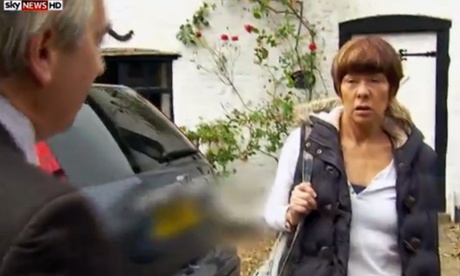
                                   Sky reporter Martin Brunt confronts Brenda Leyland at her house in Leicestershire.
This article is about a women who threatened the McCann family over the social networking site, Twitter. Brenda Leyland, 63, was found in a hotel room in Leicester on Saturday, after being challenged outside her home by the broadcaster over claims that she used Twitter to post a series of comments attacking the McCanns, whose daughter disappeared in Portugal in 2007.


  • Leyland was accused of being one of dozens of people to have attacked Kate and Gerry McCann via the internet.
  • Leyland explained that she “had questions for the McCanns” but “hoped she hadn’t broken the law” in her online posts.
  • Neighbours said they believed Leyland had fled the small village in rural Leicestershire, where she had lived for nearly 15 years.
  • A Leicestershire police spokeswoman said: “Police were called at 1.42pm on Saturday 4 October to reports of a body of a woman in a hotel room in Smith Way, Grove Park.
  •  Gerry McCann, told BBC Radio 4’s Today programme that he had not read the alleged abusive messages, and did not intend to. But he added: “Clearly something needs to be done about the abuse on the internet. I think we probably need more people charged.”
I think this article is interesting as it shows the negatives of new and digital media and how social networking sites are abused. This is an example of how a lady took to twitter, one of the largest social media sites, in order to attack the McCann family after their terrible encounter of their daughter who went missing 7 years ago.

Tuesday, 30 September 2014

Research activity


Who are the major players in terms of news providers in the UK and what exactly do they own?
News providers:
Broadcast-
·         TV- BBC news, Sky news, ITV news
·         Radio stations- BBC radio 1
Print-
·         Newspapers- The Sun, The Times, The Sunday Times, Press Association, The Guardian (all owned by Murdoch’s News Corp)
E-media-
·         Social networking as a news provider (Twitter, Facebook...)
·         The online news sites such as BBC news
·         Online newspapers such as the Guardian
 
Commercial institutions want to maximise profit such as platforms like print which are newspapers like The Sun and The Guardian. The aim for News Cooperation is to make as much money as possible. Broadcasters such as Sky news also aim to maximise profit in order to produce more programmes. However the BBC is a public service broadcaster and does the same but this is because everybody has to pay for a TV license in order to watch the news which is non-biased as the BBC provides for the nation, therefore it could be classed as non-commercial. Channel 4 is a commercial public broadcaster and they also have channel 4 news.  There are now 228 radio stations with FM broadcast licenses that are licensed by Ofcom.
Non-commercial institutions such as newspapers like The Metro are provided free for the public mainly on public transport, this is because they are more interested in giving people the opportunity to read the latest news so everyone is aware of the issues going on in the nation/world as this is very important. Radio is a broadcast platform; Community radio stations typically cover a small geographical area and run on a not for profit basis. The Freeview channels are non-commercial such as Freesat, Freeview, Virgin.
 These are the major players in terms of news providers, institutions such as News Cooperation which owns the majority of the UK newspapers. The BBC broadcasts some of the most successful dramas and documentaries and is most watched for the news.